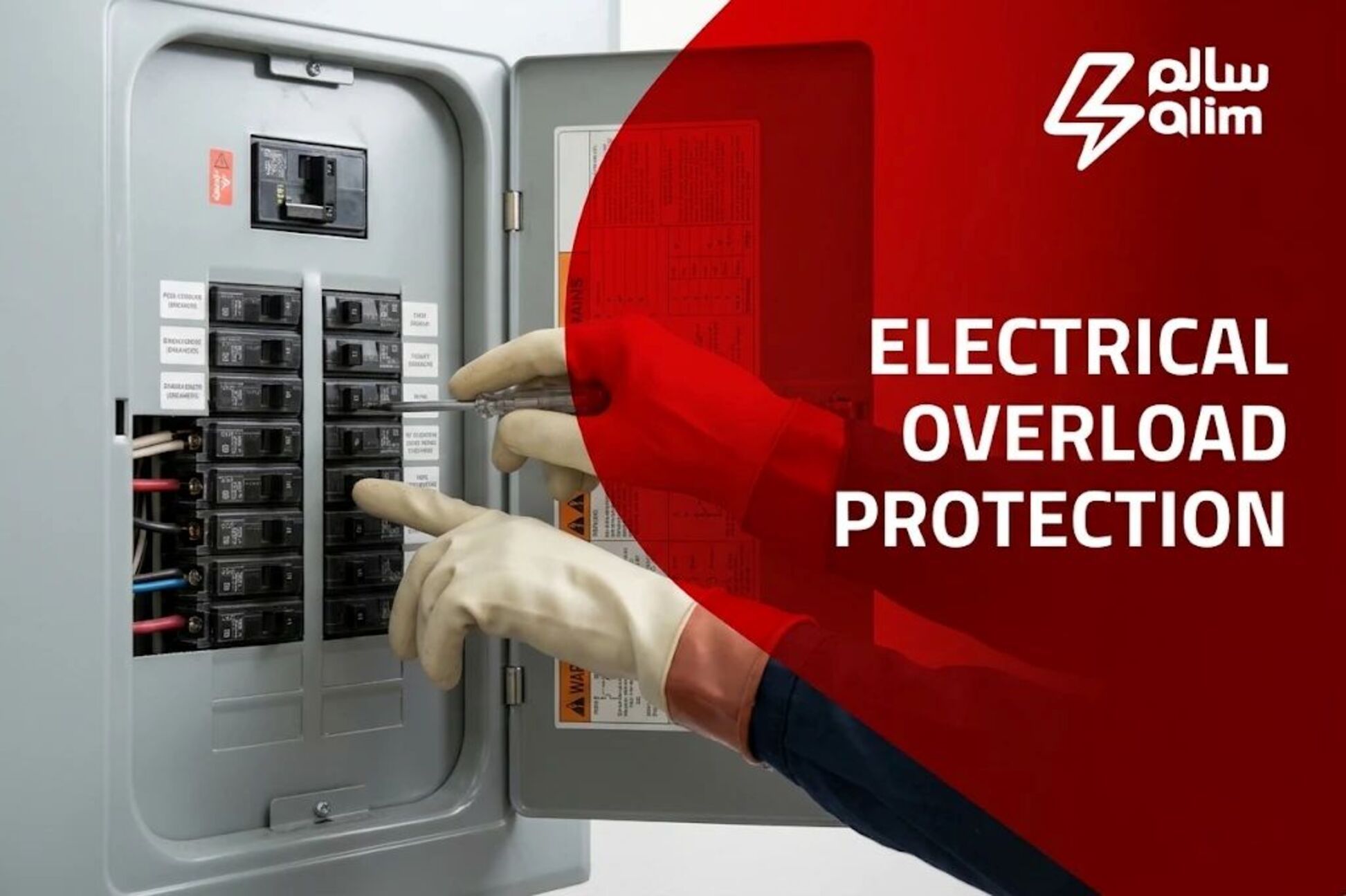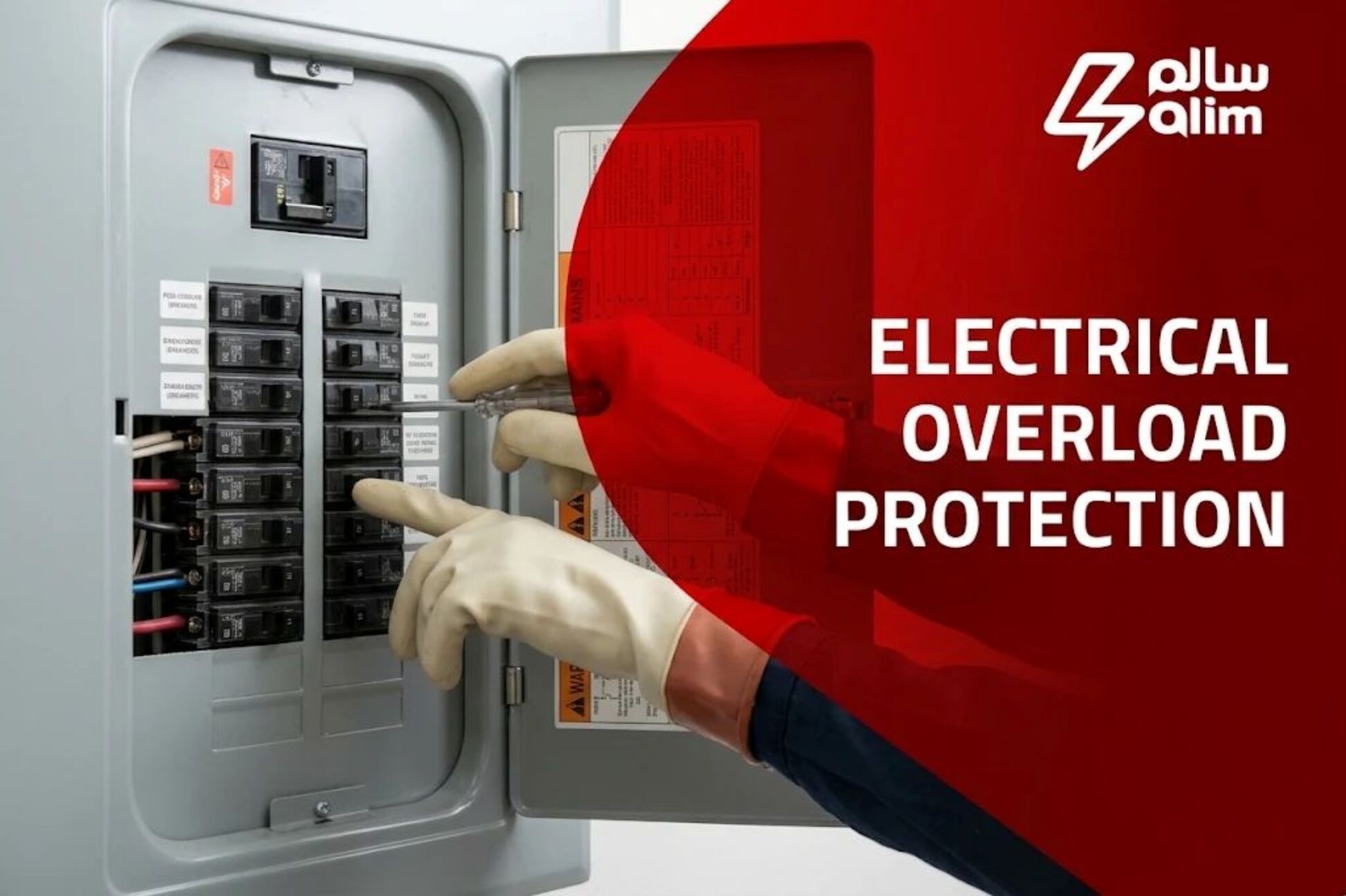
Electrical overload protection is essential for preventing equipment damage, overheating, and electrical fires in commercial buildings across Saudi Arabia. An electrical overload occurs when a circuit carries more current than it is designed to handle, potentially putting your building and occupants at risk. Recognising early warning signs, understanding common causes, and choosing the right protection measures can help prevent costly failures and improve electrical safety. Salim Service provides specialised electrical inspection services to help identify potential risks, assess the condition of electrical installations, and support safer, more reliable building operations.
How Does Electrical Overload Protection Work?
Electrical overload protection prevents excessive current from flowing through electrical circuits for longer than their safe operating limits. Every cable, conductor, and electrical component has a specific current-carrying capacity. When the connected equipment demands more electricity than the circuit can safely supply, the system needs a reliable way to interrupt that current.
The most common protection devices include:
- Miniature Circuit Breakers (MCBs): Protect individual circuits against overloads and short circuits. They automatically interrupt the electrical supply when current exceeds their operating limits.
- Moulded Case Circuit Breakers (MCCBs): Commonly used in commercial and industrial installations because they can accommodate higher current ratings and adjustable protection settings.
- Thermal Overload Relays: Typically used with electric motors to detect sustained excessive current and disconnect the motor through its control circuit.
- Fuses: Interrupt excessive current by melting a designed internal element when the current exceeds its specified limit.
Common Causes of Electrical Overloads in Electrical Systems
What happens when your building's electrical demand exceeds the capacity of its installation? An overload can develop gradually as you introduce new equipment, expand operations, or increase the number of electrical appliances connected to existing circuits.
Understanding the causes helps you identify potential risks before they affect your building.
1. Connecting Too Many Electrical Appliances
One of the most common causes of electrical overload is connecting several high-power appliances to the same circuit. In commercial buildings, this can happen when employees use additional equipment, offices expand, or new electrical devices are introduced without reviewing the existing load capacity.
2. Undersized Electrical Wiring
Electrical cables must be selected according to the current they are expected to carry. When cables have insufficient capacity for the connected load, they can overheat during normal operation.
This problem may result from poor initial design, inappropriate modifications, or changes in building usage.
3. Faulty Electrical Equipment
Damaged appliances, malfunctioning motors, and deteriorating electrical components can draw excessive current. These conditions may place additional pressure on circuits and increase the risk of electrical faults.
4. Poor Electrical Load Distribution
In commercial properties, electrical loads are not always distributed evenly across circuits or phases. An overloaded phase can experience excessive current even when the overall building demand appears acceptable.
Proper load assessment and distribution are therefore essential, particularly in buildings with substantial air-conditioning, lighting, and machinery requirements.
5. Unplanned Building Expansions
Have you recently added new offices, equipment, production areas, or air-conditioning units? If so, your original electrical installation may no longer meet your building's requirements.
Without reviewing the electrical load and distribution capacity, these changes can create serious overload risks.
Signs Your Electrical System Needs Overload Protection
Electrical overloads do not always cause an immediate shutdown. In many cases, your building provides warning signs that something is wrong. Recognising these indicators early can help you prevent equipment damage and more serious electrical incidents.
Pay attention to the following signs:
- Frequently tripping circuit breakers: Repeated interruptions may indicate that a circuit is carrying more current than its protective device permits.
- Overheating electrical panels: Excessive heat around distribution boards, breakers, or electrical connections requires immediate professional assessment.
- Burning smells: An unusual burning or melted-plastic smell near electrical equipment may indicate overheating insulation or connections.
- Flickering or dimming lights: Noticeable changes in lighting when heavy equipment starts operating may indicate an electrical supply or load-distribution issue.
- Damaged cables and discoloured sockets: Visible deterioration, melted insulation, and darkened electrical components should never be ignored.
- Unexpected equipment shutdowns: Repeated interruptions to machinery or commercial equipment may point to electrical supply or protection problems.
It is important to understand that these symptoms do not automatically confirm an overload. Some may also indicate loose connections, short circuits, voltage disturbances, or other electrical faults.
If you notice any of these warning signs, avoid repeatedly resetting circuit breakers or attempting electrical repairs yourself. Have the installation assessed by qualified electrical professionals to identify the underlying problem.
Electrical Overload Protection Solutions for Commercial Buildings
Commercial buildings require dependable electrical systems to support daily operations, protect valuable equipment, and maintain occupant safety. From office complexes and shopping centres to warehouses and industrial facilities, electrical protection must reflect the building's actual operating requirements.
So, what are the most effective solutions?
Proper Electrical Load Assessment
Start by determining how much electricity your building requires. An electrical load assessment helps establish whether the existing installation can support current equipment and future operational demands.
It should consider major electrical consumers, including air-conditioning systems, elevators, lighting, machinery, and other high-demand equipment.
Installing Appropriate Overload Protection Devices
Choosing the correct protective equipment is absolutely essential. Circuit breakers, overload relays, and fuses must be selected according to the electrical characteristics of each circuit.
For larger commercial installations, adjustable protection settings may be necessary. However, these settings must be determined by qualified professionals and coordinated with the installation's design.
Maintaining Electrical Distribution Panels
Your distribution panels control how electricity reaches different parts of your building. Poor connections, damaged components, incorrect breaker ratings, and inadequate maintenance can compromise their reliability.
Regular inspection helps identify deterioration and other conditions that may affect the performance of protective devices.
Reviewing Electrical Load Distribution
As your business grows, its electrical requirements change. Reviewing the distribution of loads across circuits and phases helps prevent individual circuits from carrying excessive current.
This is particularly important for facilities operating several heavy-duty machines or large air-conditioning systems simultaneously.
Conducting Professional Electrical Inspections
Installing protection devices is only part of the solution. You also need to establish whether the complete electrical installation is properly designed, maintained, and operating safely.
Professional inspection provides a clearer picture of the condition of your electrical infrastructure. It helps identify visible defects, installation concerns, and potential non-compliance that may otherwise go unnoticed.
For commercial property owners in Saudi Arabia, this is particularly important because electrical installations must be assessed against applicable requirements of the Saudi Building Code, including the Saudi Electrical Code (SBC 401).
This is where professional inspection services make a measurable difference. By assessing electrical installations and power distribution systems, you can make informed decisions about maintenance, corrective measures, and building safety.
Electrical overloads can cause overheating, damage electrical equipment, and increase the risk of electrical fires. Preventing these risks requires proper load distribution, regular electrical inspections, and the use of suitable protection devices. To prevent electrical overloads and protect equipment, follow these essential measures:
- Distribute Electrical Loads Properly: Avoid connecting multiple high-power appliances to the same outlet or circuit to prevent excessive current flow.
- Use Appropriate Circuit Breakers: Install correctly rated circuit breakers to protect electrical circuits from overloads and short circuits.
- Inspect Wiring and Connections: Check cables, outlets, and electrical panels regularly for signs of overheating, loose connections, or damaged insulation.
- Avoid Overloading Extension Cords: Use extension cords according to their rated capacity and avoid connecting multiple extension cords together.
- Schedule Periodic Electrical Inspections: Have qualified specialists assess electrical loads, wiring conditions, and protective devices to identify potential hazards before they cause equipment damage.
- Replace Damaged Electrical Components: Promptly replace worn cables, damaged outlets, and faulty protective devices with suitable, approved alternatives.
Professional electrical wiring safety is essential for identifying electrical overload risks, assessing load distribution, and ensuring that cables, circuit breakers, and distribution panels operate safely. Salim provides specialised electrical inspection services to help commercial and residential property owners identify potential electrical hazards, evaluate installation conditions, and protect equipment from preventable damage. Request your service now.
Frequently Asked Questions About Electrical Overload Protection
1. What are the common signs of an Electrical Overload Protection?
Common signs include frequently tripping circuit breakers, flickering lights, overheating outlets, burning smells, and electrical equipment shutting down unexpectedly. These warning signs require prompt inspection by a qualified electrician.
2. How can circuit breakers protect electrical equipment from overloads?
Circuit breakers automatically interrupt the electrical supply when current exceeds the circuit's rated capacity for a sufficient period. This helps prevent excessive heating, wiring damage, and potential electrical fires. However, circuit breakers must be correctly selected and installed to provide effective protection.
3. How often should electrical systems be inspected to prevent overloads?
Electrical inspection frequency depends on the building's usage, electrical load, system condition, and applicable safety requirements. Inspections are also recommended when adding high-power equipment, expanding electrical circuits, or noticing repeated breaker trips or overheating.