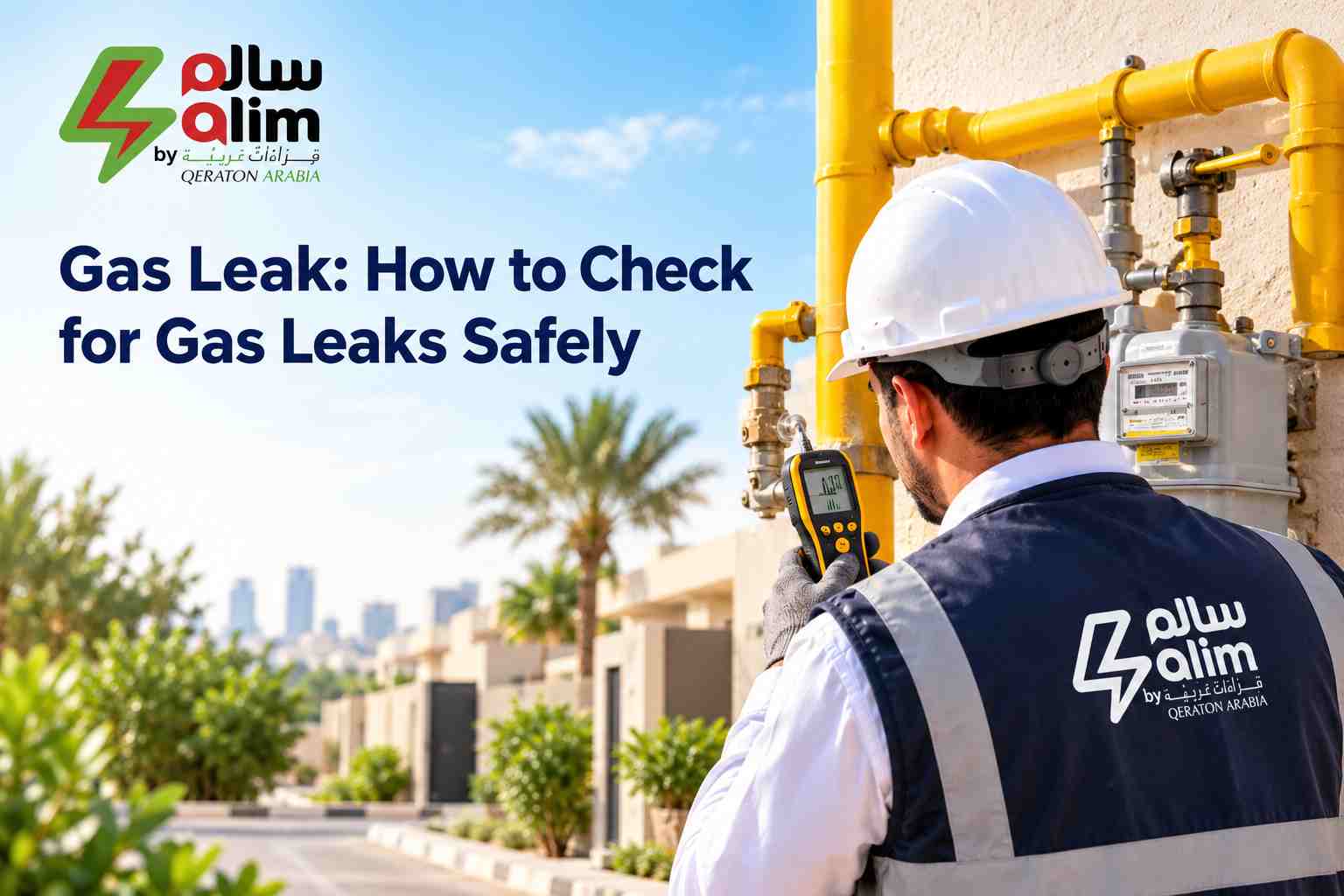
A gas leak soap test may seem like a quick answer when you notice a gas smell or suspect a loose connection. But what if the leak is hidden, too small to notice, or part of a wider building-system problem? A bubble check can identify certain accessible leaks, but it should never replace professional inspection. Salim Service emphasizes the importance of understanding the test’s limitations and recognizing when a more comprehensive assessment is needed. In this guide, you’ll learn how the test works, when it helps, its limits, essential safety precautions, and when to call a qualified building inspection team.
Gas Leak Test: A Simple Guide to Detecting Gas Leaks
When gas piping is properly maintained, you may rarely think about the joints and connections hidden behind equipment, ceilings, or service areas. Yet these points can become critical when a connection loosens, a seal deteriorates, or a component is damaged.
The gas leak soap test uses a simple principle: when an appropriate soapy solution is applied to a pressurized gas connection, escaping gas can create visible bubbles at the leak point. The U.S. Consumer Product Safety Commission describes the same basic approach for LP-gas connections, while NFPA materials recognize bubbles produced by a soap-and-water solution or equivalent leak-detection fluid as an indication of leakage under specified test conditions.
That makes the method useful for checking an accessible connection. However, you should not confuse a localized bubble check with a complete gas piping inspection. A building can contain multiple branches, valves, appliances, regulators, and concealed sections that cannot be adequately assessed from one surface test. Mechanical Systems Inspection provides a broader approach to evaluating accessible mechanical components and identifying potential issues that may require further professional assessment.
For property owners and facility managers in Saudi Arabia, this distinction matters. The Saudi Fuel Gas Code, SBC 1201, covers gas piping installations and includes recommended inspection procedures for existing appliance installations, including gas piping and connection inspections. Gas safety is therefore about more than finding one bubble; it is about evaluating the system as a whole.
How Does a Gas Leak Test Work? Everything You Need to Know
The idea is straightforward. Gas escaping through a small opening passes through the liquid film on the fitting. If conditions are suitable, the escaping gas forms bubbles that grow or continue appearing.
A localized check generally involves applying an appropriate leak-detection solution to an accessible joint or connection while the system is in the correct test condition. If bubbles appear and persist, that is a strong indication that gas is escaping from that point.
However, there is an important distinction between “bubbles appeared” and “the entire gas system is unsafe.” The first is a localized finding. The second requires a broader technical assessment.
You should also avoid using just any household liquid or chemical. Certain leak-detection fluids contain ammonia could corrode brass fittings and contribute to later leaks. Use a suitable leak-detection solution intended for the application and follow the manufacturer’s instructions.
Most importantly, if you already smell gas strongly, hear hissing, or suspect a significant release, do not start experimenting with a soap solution. Leave the area and seek professional assistance. A suspected active gas leak is a serious safety issue, not a DIY troubleshooting exercise.
Gas Leak Soap Test: Signs, Steps, and Safety Tips
Before considering any leak check, pay attention to warning signs around your building. A gas problem does not always announce itself dramatically.
Possible signs include:
● A persistent gas odor near an appliance, valve, or connection.
● Hissing or unusual sounds around gas piping.
● Visible damage, corrosion, or deterioration around fittings.
● Sudden changes in appliance performance.
● Repeated concerns about gas pressure or supply.
● A connection that has recently been disturbed, replaced, or repaired.
If you notice a gas smell inside a building, prioritize evacuation and professional assistance rather than trying to locate the source yourself. Gas can create a fire or explosion hazard, and an ignition source may turn a leak into a serious incident.
If a qualified person is performing a localized gas leak soap test under appropriate conditions, the basic sequence is:
1. Identify the accessible joint or connection that needs checking.
2. Confirm that the testing method, pressure condition, and solution are appropriate for the system.
3. Apply the leak-detection solution to the joint.
4. Watch closely for bubbles that form or grow.
5. Treat persistent bubbling as an indication requiring attention.
6. Have the affected connection assessed and provides technical information where necessary to be repaired by a qualified professional.
7. Re-test the repaired section using the appropriate inspection or testing method along with qualified professional.
That final step is critical. Finding a leak is only half the job. You need to confirm that the repair has resolved the issue and that other parts of the system do not present additional risks.
Using a Gas Leak Soap Test to Identify Leaks in Gas Systems
A gas leak soap test can be valuable, but its strength is simplicity—not its ability to replace engineering inspection.
Imagine you manage a commercial property in Riyadh and notice a gas odor close to a kitchen appliance. A localized check might reveal bubbling around an accessible connection. That finding can direct attention to the fitting, but it does not tell you whether another joint farther along the piping is also leaking, whether the piping arrangement meets applicable requirements, or whether valves, supports, ventilation, and appliance connections are in suitable condition.
This is where professional building inspection becomes essential.
The Saudi Fuel Gas Code, SBC 1201-CC 2024, includes dedicated provisions covering gas piping and connection inspections within its recommended procedure for inspecting existing appliance installations. It also addresses broader aspects of fuel-gas systems, reinforcing the need to look beyond one connection when evaluating safety.
A professional inspection helps you move from “I think there may be a leak” to “I have documented evidence of the condition of this system.”
Gas safety can also overlap with other building risks. For example, Electrical faults can create ignition risks where combustible gas may be present. This does not mean every electrical issue causes a gas incident, but it does mean comprehensive building safety should consider gas and electrical systems together.
When Should You Call a Professional Inspector?
You should certainly seek professional inspection when the suspected issue involves a building-wide gas piping system, concealed piping, commercial facilities, repeated leaks, recent modifications, or uncertainty about compliance.
Professional inspection is especially valuable when:
● You are commissioning a new building or renovated area.
● A gas piping system has been modified or extended.
● You are buying or leasing a property and need confidence in its condition.
● A previous leak has been repaired and needs verification.
● You manage a commercial, residential, industrial, or mixed-use building.
● You need documented findings and recommendations.
For Saudi buildings, working with an inspection body familiar with the Saudi Building Code and applicable inspection requirements gives you a stronger basis for decisions.
How Salim Helps You Protect Gas Piping Systems in Buildings
A reliable gas safety strategy should not end with a quick bubble check. Salim’s Inspection of Gas Piping Systems in Buildings service provides accurate inspection of approved gas piping systems and helps you understand their safety condition. Salim is provided by Qeraton Arabia and operates in line with the Saudi Building Code and ISO/IEC 17020:2012 requirements for inspection bodies. Its wider inspection scope includes gas systems alongside electrical, mechanical, power distribution, environmental, and property inspection services.
Request inspection now.
Conclusion
A gas leak soap test can identify certain accessible leaks, but it is not a complete gas-system inspection. If you detect gas odor, persistent bubbling, damaged fittings, or other warning signs, treat the issue seriously and avoid unsafe DIY troubleshooting. For Saudi buildings, professional inspection aligned with the Saudi Building Code gives you a clearer picture of your gas piping system. With Salim, you can turn uncertainty into documented findings, corrective recommendations, and greater confidence in building safety.
FAQs
What is a gas leak soap test?
A gas leak soap test is a leak-detection method in which an appropriate soapy solution or approved leak-detection fluid is applied to an accessible gas joint or connection.
How does a gas leak soap test work?
The test makes escaping gas visible. When the appropriate solution covers a pressurized connection, gas escaping through a small opening can form bubbles in the liquid film.
Is a gas leak soap test safe and accurate?
It can be useful for identifying accessible leaks when performed under appropriate conditions with a suitable solution. But a comprehensive inspection using appropriate tools and methods is necessary to assess the overall safety of the LPG system.